
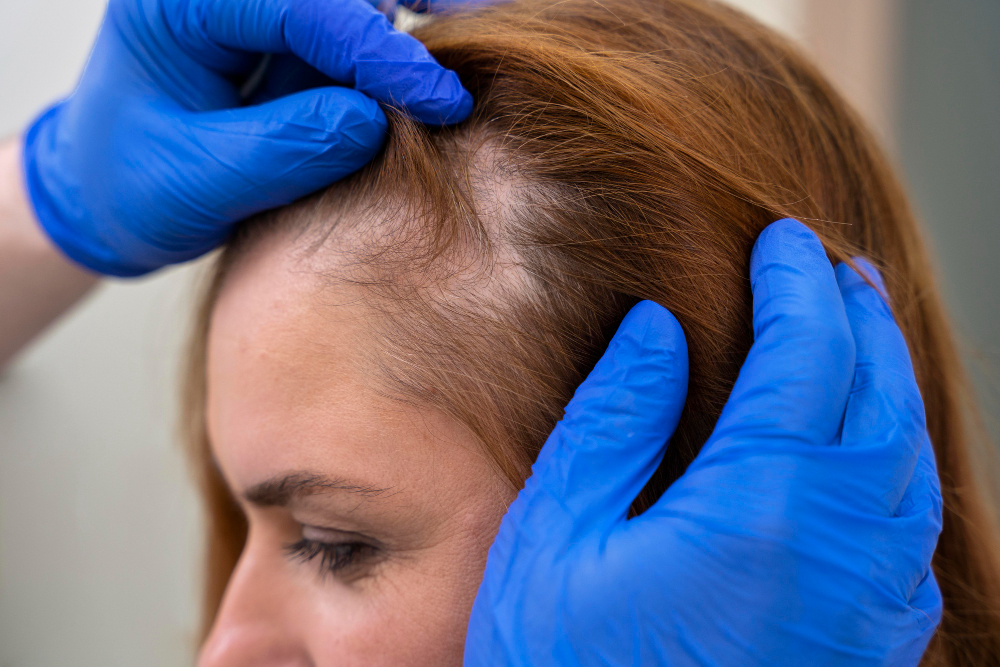
What is Female Pattern Baldness?
Female pattern baldness is a common type of hair loss in women. It is also called androgenetic alopecia. Many women notice thinning hair as they age. However, some women see changes earlier. This condition affects the top and crown of the scalp most often. Unlike men, women rarely go completely bald. Still, hair can become thin and less dense over time. According to the American Academy of Dermatology, millions of women experience this type of hair loss.
Common Symptoms and Early Signs
Early signs of female pattern baldness can be easy to miss. But, noticing them early helps with treatment. Watch for these symptoms:
Sometimes, hair loss can start after menopause. However, it may begin earlier for some women.
Causes and Risk Factors
Many factors can lead to female pattern baldness. Genetics play a big role. If your mother or grandmother had hair loss, you may be at higher risk. Hormonal changes, such as those during menopause, can also trigger hair thinning. In addition, certain medical conditions, like polycystic ovary syndrome (PCOS), may increase risk. Other risk factors include:
According to the World Health Organization (WHO), hair loss can also be linked to iron deficiency or thyroid problems. But, female pattern baldness is most often genetic.
How Female Pattern Baldness is Diagnosed
Doctors use several steps to diagnose female pattern baldness. First, they ask about your health and family history. Next, they examine your scalp and hair. Sometimes, they may gently pull on your hair to check for shedding. In some cases, blood tests help rule out other causes, like thyroid disease or low iron. If needed, a scalp biopsy may be done. This test looks at a small piece of scalp under a microscope. With these steps, doctors can find the cause and suggest the best treatment for women’s hair thinning.
Treatment Options
There are many ways to manage female pattern baldness. Treatments can slow hair loss and help regrow hair. Options include:
According to peer-reviewed dermatology journals, early treatment often works best. However, results can take several months to appear.
Prevention Tips and Lifestyle Guidance
While you cannot always prevent female pattern baldness, some steps may help slow hair loss. Try these tips:
For many women, these habits can support hair health. Still, genetics play a strong role, so prevention may not always be possible.
When to See a Dermatologist
If you notice sudden or severe hair loss, see a dermatologist. At Dr. YV Skin & Hair Clinic, we recommend getting checked if you experience itching, redness, or pain on your scalp, as early help can make a big difference. Our dermatologists can identify the cause and suggest the right treatment for you. Remember, female pattern baldness is common and treatable.
For personalised advice on female pattern baldness, consult a dermatologist at Dr. YV Skin & Hair Clinic. They can help you find the best solution tailored to your needs.