
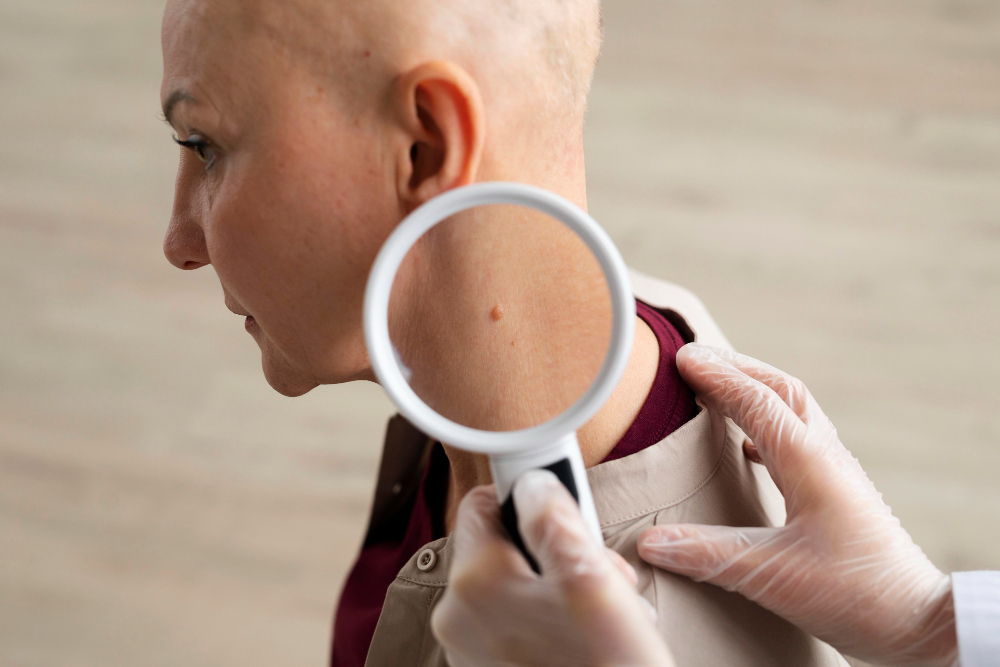
Introduction: Why Early Detection of Skin Cancer Matters
Skin cancer is the most common type of cancer worldwide. Early signs of skin cancer can be easy to miss. However, spotting these warning signs early can save lives. According to the World Health Organization (WHO), early detection of skin cancer leads to better treatment outcomes. For this reason, knowing what to look for is very important.
Common Early Signs and Symptoms of Skin Cancer
Skin cancer can appear in many ways. But, there are some common early signs you should watch for. For example, you may notice:
In addition, the “ABCDE” rule can help you spot skin cancer early:
If you notice any of these skin cancer warning signs, take them seriously. Early detection of skin cancer gives you the best chance for a cure.
Risk Factors: Who Is Most at Risk?
Anyone can get skin cancer. However, some people have a higher risk. For instance, you may be more at risk if you:
Still, even people without these risk factors can develop skin cancer. Therefore, everyone should know how to spot skin cancer early.
How to Perform Self-Examinations and What to Monitor
Regular self-exams help you find early signs of skin cancer. But how do you check your skin? Follow these steps:
In addition, keep track of any new or changing spots. Take photos if needed. This way, you can notice changes over time. If you spot anything unusual, do not wait to seek advice.
When to Seek Medical Advice
It is always better to be safe. If you notice any suspicious skin changes, contact a dermatologist. For example, see a doctor if you have:
Early detection of skin cancer can make treatment easier and more effective. So, do not ignore warning signs.
Prevention Tips and Protective Measures
While not all skin cancers can be prevented, you can lower your risk. Here are some tips:
Additionally, teach children about sun safety early. This helps prevent skin damage later in life.
Conclusion
In summary, recognising the early signs of skin cancer and acting quickly can make a life-saving difference. Regular self-checks and daily sun protection are essential to keeping your skin healthy. If you notice any new, changing, or unusual spots, don’t wait — consult a dermatologist at Dr. YV Skin Clinic for expert evaluation and personalised care